

What Is Coconut Rice? Health Benefits and Pairings: Indian Food Bloomfield CT
Introduction:
Let me guess: you've eaten plenty of plain white rice in your life, but somewhere along the way you heard about coconut rice and wondered what the fuss was about. On paper it sounds simple, rice and coconut, how exciting can that be? But one spoonful of the real South Indian version, with its toasted mustard seeds, crackly curry leaves, and that soft, nutty coconut smell, and you start to understand why families make it for festivals and pack it in lunchboxes. So what exactly is it, is it actually good for you, and where can you try a proper version? Let's sort all of that out.
Coconut Rice: A Flavorful South Indian Dish
What Is Coconut Rice?
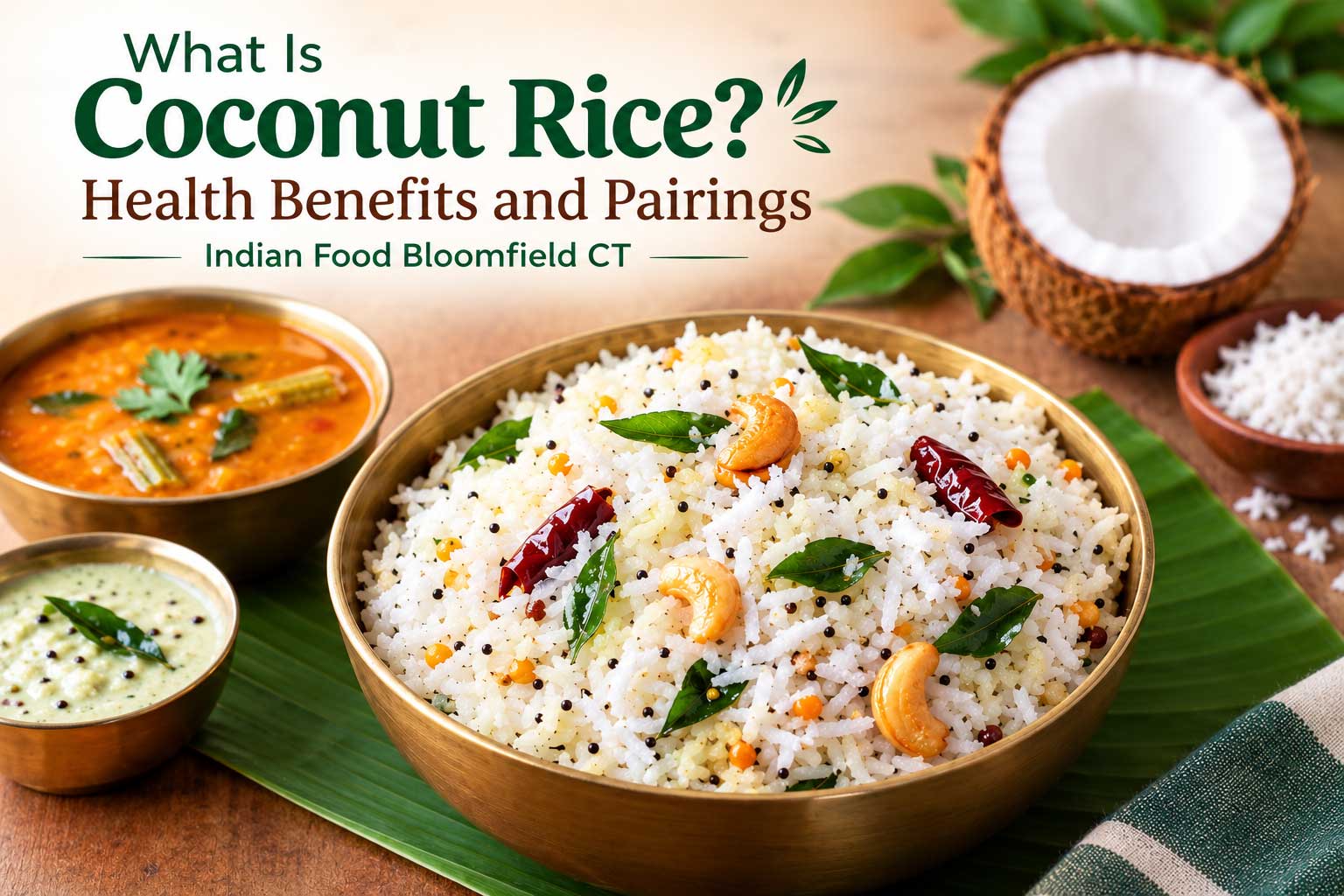
Okay, so here's the basic idea. Coconut rice,called thengai sadam in Tamil and kobbari annam in Telugu, is cooked rice mixed with freshly grated coconut and a spiced tempering. If you haven't come across the word "tempering" before, it just means frying whole spices in hot oil or ghee to wake up their flavor. Here that means mustard seeds, urad dal, dried red chilies, curry leaves, and usually a few cashews, all sizzling until golden. The grated coconut goes in for a quick toss, then the rice, and that's really it.
What surprises people is how light it tastes. It isn't sweet, and it isn't heavy. Some South east Asian versions simmer the grains in coconut milk, which gives a richer, creamier result, but the South Indian way adds the coconut after cooking so every grain stays separate and fluffy. It's also one of those rare dishes that tastes just as good cold, which is exactly why coconut rice ends up in so many school and office lunchboxes.
Discover the Flavors of South Indian Food Bloomfield CT
If you've ever searched for South Indian Food Bloomfield CT locals talk about, you probably saw dosas and idlis pop up first. They're great, but they're only the beginning. South Indian cooking is built around rice, lentils, tamarind, curry leaves, and coconut, and those ingredients show up in wildly different ways, in a tangy sambar one minute, a peppery vegetable stir-fry the next, a cool coconut chutney after that.
Compared with the buttery, creamy gravies many people associate with Indian restaurants, this style feels lighter, sharper, and a bit more herbal. Honestly, coconut rice is a friendly place to start if you're new to it, since nothing about it is intimidating or overly spicy.
Delicious Indian Dishes to Pair With Coconut Rice
Is Coconut Rice Healthy for You?
Short answer: it can be, as long as you don't go overboard. You get carbohydrates from the rice, natural fats from the coconut, a little fiber, and minerals like manganese. The tempering adds small amounts of protein from urad dal and cashews.
The catch is saturated fat. Coconut has quite a bit of it, so a version loaded with ghee or coconut milk is definitely heavier than the fresh-coconut style. Nutrition guidelines generally suggest keeping saturated fat modest, so think of this as a dish to enjoy, not one to pile onto your plate three times a day.
A few easy tweaks help. Go lighter on the oil, try brown rice for extra fiber, and serve a moderate scoop with vegetables and some protein, like lentils or chicken. Done that way, coconut rice fits into an ordinary weekday meal just fine. And if you're managing a health condition, a registered dietitian can give you advice that's actually tailored to you.
Discover Coconut Rice at an Indian Restaurant in Bloomfield CT
Here's the honest truth: the tempering is where home cooks slip up. Mustard seeds need to pop without burning, curry leaves should turn crisp, and the coconut needs just enough heat to release its aroma, not so much that it turns bitter. That's why tasting coconut rice at an Indian Restaurant in Bloomfield CT is such a good way to find out how it's supposed to taste. Cooks who make it every day tend to have the timing down. When it arrives, look for fluffy, separate grains and a toasty coconut smell. Order it with sambar or a spicy curry and see how the mellow rice softens the heat.
Conclusion:
So there you have it. Coconut rice is proof that a few humble ingredients, fresh coconut, toasted spices, and a well-made tempering, can turn into something you actually look forward to. It's light, fragrant, and easy to love, and in sensible portions it fits into a balanced diet without any fuss. Pair it with something tangy or spicy and it's even better. Whether you're cooking it yourself or ordering out, it's worth giving it a proper try. If you're nearby and want to taste it made with real care, Naatiya Indian Restaurant in Bloomfield, CT is a great place to do it.
Frequently Asked Questions
1. What spices are commonly used in coconut rice?
Common ingredients include mustard seeds, urad dal, dried red chilies, curry leaves, and cashews. Some recipes may also include green chilies, ginger, or other regional spices.
2. Is coconut rice a South Indian dish?
Yes. Coconut rice, known as thengai sadam in Tamil and kobbari annam in Telugu, is a popular South Indian preparation enjoyed in homes, lunchboxes, and festive meals.
3.What gives coconut rice its aroma?
Freshly grated coconut, curry leaves, mustard seeds, dried chilies, and toasted cashews contribute to the characteristic aroma of South Indian coconut rice.
4. Why is coconut rice popular in South Indian cuisine?
Its simple ingredients, fragrant tempering, easy preparation, and versatile pairings make coconut rice a popular choice for everyday meals, lunchboxes, and festive occasions.